Hybrid Coaching Model: 4 Layers Coaches Can Pilot at Work
Hybrid Coaching Model: 4 Layers Coaches Can Pilot at Work

A hybrid coaching model blends face-to-face sessions with virtual and digital touchpoints so coaching becomes continuous instead of occasional. It gives coaches, trainers, and workplace leaders a way to deliver development that fits how hybrid teams actually work: part in-person, part remote, always in motion. The result is coaching that scales without losing the personal connection that makes it effective.
TL;DR:
- Clients with baseline skills who need accountability suit hybrid coaching; novices and people facing behavior change need more live contact before adding digital check ins.
- Coaches should begin with open questions, ask permission before offering direct advice, and make stance changes explicit because virtual formats hide nonverbal cues.
- Start with a small pilot lasting six to nine weeks, then review engagement, behavior change, and goal linked business measures before expanding access.
- Limit the tool stack to two or three platforms, since separate video, messaging, and tracking systems can overwhelm clients before coaching begins.
- Review engagement, behavior change, and goal linked business measures every four to eight weeks, adjusting the mix before clients disengage.
Table of Contents
- What a blended coaching model actually includes
- Which coaching stance fits each hybrid moment
- Building a coaching culture that fits hybrid work
- Choosing tools for synchronous and asynchronous sessions
- Who owns what, and how to measure impact
- From coaching practice to a paid program
- Which clients fit a hybrid coaching model best
- Onboarding clients into a blended coaching program
- Where hybrid coaching delivery tends to break down
- What successful hybrid coaching rollouts have in common
- What I’d prioritize if I were starting today
- Turning your coaching practice into a launched offer
- FAQ
- Sources
What a blended coaching model actually includes
A hybrid, or blended, coaching model combines several delivery channels instead of relying on one. Most working versions include four layers: scheduled face-to-face sessions, live virtual calls, asynchronous digital touchpoints like recorded feedback or messaging, and community or peer coaching where participants support each other between formal sessions. The Blended Coaching model developed by Bloom and Wilson frames this as mixing facilitative, instructional, and collaborative strategies within the same engagement rather than picking one approach and sticking to it.

A useful distinction inside this framework separates “ways of being” from “ways of doing.” Ways of being cover dispositions and emotional intelligence: how a coach listens, builds trust, and reads a client’s readiness. Ways of doing cover skills and process: goal-setting templates, feedback protocols, and the mechanics of a session. A hybrid model needs both channels tuned to carry each type of support. Video calls handle the relational work well; asynchronous tools carry structured, repeatable processes efficiently.
A simple hybrid pathway might run like this: an initial in-person or video kickoff session to build rapport and set goals, two weeks of asynchronous check-ins through short video or messaging, a live virtual coaching call to review progress, then a peer discussion thread before the cycle repeats. That rhythm keeps the relationship personal while using digital tools to handle the between-session support that used to fall through the cracks.
Which coaching stance fits each hybrid moment
Blended coaching works best when coaches can move fluidly between stances rather than defaulting to one style for every interaction. Practitioner guidance built around the I-C-F framework, instructive, collaborative, facilitative, recommends starting in a facilitative stance and shifting toward collaborative or instructive input only when the client genuinely needs it.
- Facilitative stance: The coach asks questions and lets the client generate their own solutions, best for clients who already have the skills but need space to think.
- Collaborative stance: The coach and client problem-solve together as equals, useful when a challenge is new to both parties.
- Instructive stance: The coach provides direct guidance or expertise, appropriate when a client lacks the information or experience to move forward alone.
This maps to a technique called least-to-most prompting: begin with open, non-directive questions, and only escalate to direct advice when the client stalls or explicitly asks for it. In hybrid settings, this shift needs to be more deliberate than in person, since video and messaging strip away the nonverbal cues that normally signal when someone wants more direction. A coach running a one-on-one video session might ask two or three open questions before checking in explicitly: “Would it help if I shared what’s worked for other clients in this spot?” In group settings, the same shift happens through a quick poll or chat prompt before the coach moves to instruction.
Pro Tip: Before switching from facilitative to instructive mode, ask permission out loud. It replaces the nonverbal cues that hybrid formats remove.
Building a coaching culture that fits hybrid work
Coaching only sticks when it connects to how an organization already measures performance. Leaders rolling out a hybrid coaching model should align the program with HR and people-strategy goals from day one, tying coaching cadence to the same outcome metrics used for performance reviews or engagement surveys.
A staged rollout tends to outperform a single company-wide launch:
- Start with managed access: a small pilot group with a dedicated coach and clear entry criteria.
- Democratize access gradually, opening the model to more teams once the pilot shows results.
- Shift toward coaching-as-leadership, training managers to use coaching stances in everyday conversations.
- Move to distributed coaching, where peer and community coaching sustain the culture without constant central oversight.
Each stage needs its own staffing mix and governance checklist: who certifies coaches, how often cohorts rotate, what data gets reviewed, and who owns the budget as the program scales past the pilot phase. Skipping stages usually means the program stalls once the original champion moves on, since no one else was trained to carry it forward.
Choosing tools for synchronous and asynchronous sessions
The channel should match the task. Synchronous sessions, live video or in-person, work best for relationship-building, complex problem-solving, and moments requiring real-time feedback. Asynchronous tools work best for routine check-ins, reflection prompts, and reinforcing skills between live sessions. Blended coaching research describes this as pairing face-to-face observation with digital follow-up, a pause-discuss-adjust cycle that keeps new practices from fading once the live session ends.
A workable tool pattern looks like this:
- A video platform for live one-on-one or group sessions.
- A shared document or LMS for artifacts: goals, notes, and progress tracking.
- A short-form messaging tool for asynchronous check-ins between sessions.
A practical six-week module might run one live session per week alternating with two asynchronous check-ins, closing with a final live review. That cadence gives clients enough live contact to stay accountable without requiring the time investment of weekly in-person meetings.
Who owns what, and how to measure impact
Clear roles keep a hybrid program from collapsing into confusion. The coach owns the relationship and session design. A sponsor, often a manager or HR lead, owns resourcing and removes organizational barriers. A cohort lead coordinates logistics across a group. Peer supporters reinforce learning between formal sessions.
Measurement should track three layers: engagement signals (session attendance, response rates to asynchronous prompts), behavior-change indicators (observed shifts in how clients handle real situations), and short-term business KPIs tied to the original goal, whether that is retention, sales performance, or team satisfaction scores.
Running the program in short cycles, four to eight weeks, with a feedback checkpoint at the end of each, lets coaches adjust the mix of synchronous and asynchronous support before small problems become reasons clients disengage.
From coaching practice to a paid program
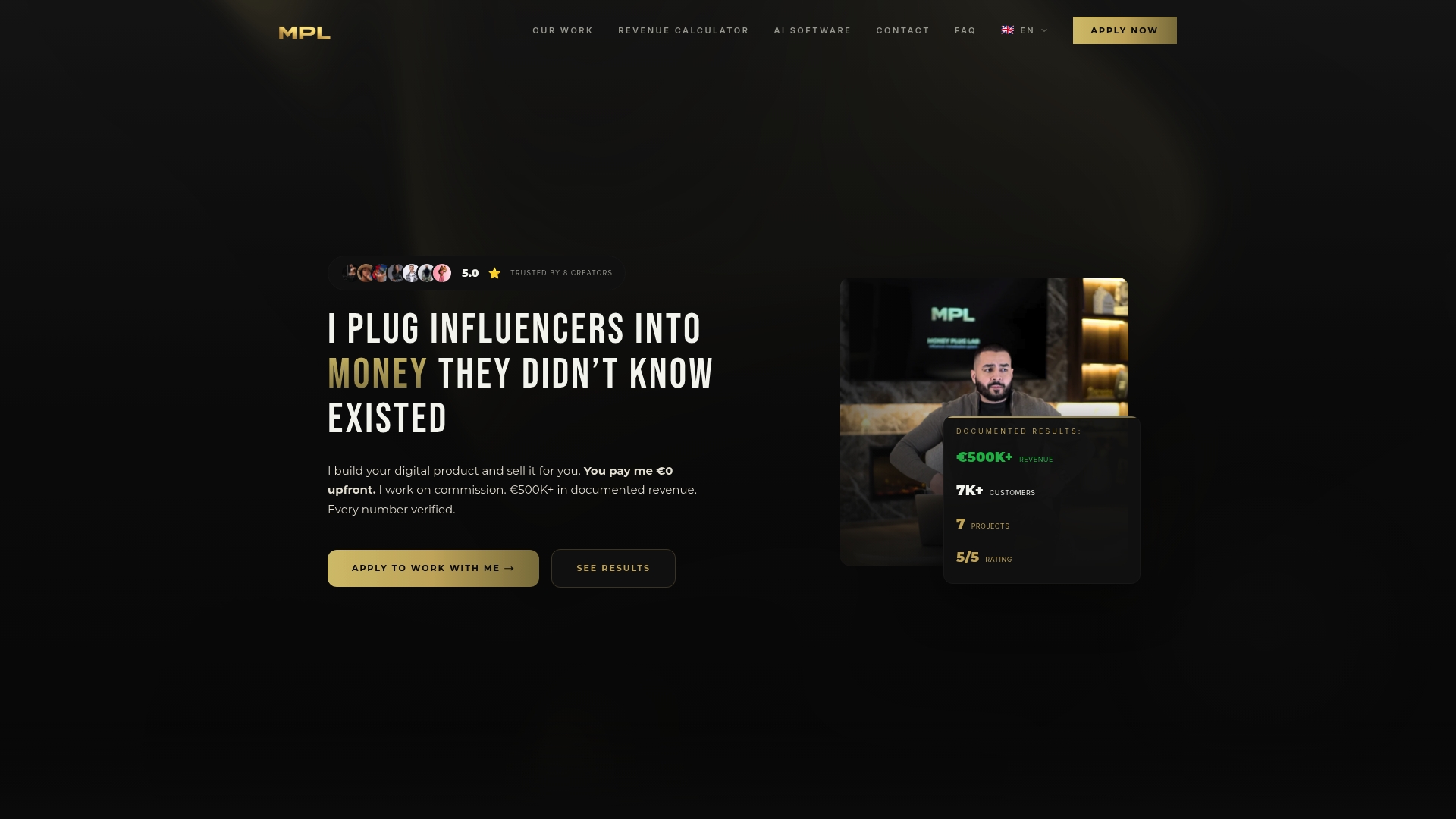
Turning hybrid coaching expertise into a paid offer takes more than good sessions: it takes product structure, pricing, and a launch plan. Coaches partnering with Money Plug Lab on a revenue-share basis have launched programs that generated more than $500,000 in tracked revenue across seven launches, including one campaign that returned 18x on ad spend. Managed launch services, product architecture, payment infrastructure, and campaign execution, map directly onto what a hybrid coaching offer needs to go from pilot to paid cohort.
Which clients fit a hybrid coaching model best
Not every client benefits equally from a blended format. Clients who already have some baseline skill but need ongoing accountability tend to thrive, since asynchronous check-ins reinforce habits between live sessions. Busy professionals and hybrid-workplace managers also fit well, since the model matches the fragmented schedule they already live with rather than forcing a fixed weekly meeting.
Clients newer to a skill area or working through a significant behavior change often need more live, synchronous contact early on, with the asynchronous layer added once the relationship and trust are established. Group cohorts work well for clients motivated by peer accountability, where community coaching threads do real work between formal sessions. Clients who prefer complete self-direction with minimal check-ins are a weaker fit, since the asynchronous layer depends on some level of regular engagement to add value.
Selection criteria worth checking before enrolling a client: comfort with digital tools, existing baseline skill level, schedule flexibility, and whether the goal is skill-building (works well hybrid) versus crisis intervention (often needs more concentrated live support). Matching the client profile to the delivery mix before the first session prevents the common failure mode of defaulting every client into the same cadence regardless of fit.

Onboarding clients into a blended coaching program
A strong hybrid onboarding sequence sets expectations for both channels before the first real coaching conversation happens. Start with a kickoff session, ideally live, that covers goals, preferred communication style, and how the asynchronous tools will work. Clients unfamiliar with messaging-based check-ins or shared documents need a short walkthrough here, not a assumption that they will figure it out.
Set a clear cadence in writing: how often live sessions happen, what asynchronous check-ins look like, and expected response times on both sides. Ambiguity here is the most common cause of hybrid programs losing momentum in week two or three. Confirm consent for the coaching stance shifts described earlier: clients should know upfront that the coach may move from facilitative questions to direct suggestions, and that this shift will usually be flagged explicitly.
Close onboarding with a short trial cycle, one live session plus one asynchronous check-in, before locking in the full program cadence. This gives both coach and client a chance to adjust the mix of synchronous and asynchronous contact based on how the first exchange actually felt, rather than guessing at the right balance from a generic template.
Where hybrid coaching delivery tends to break down
The most common failure in hybrid coaching is uneven engagement: clients show up for live sessions but ignore asynchronous prompts, or vice versa. The fix is treating the asynchronous layer as a required part of the cycle, not an optional add-on, and following up directly when it goes quiet rather than waiting for the next scheduled call.
A second challenge is losing nonverbal cues in virtual and asynchronous exchanges, which makes it harder to know when a client needs more direct input. The least-to-most prompting approach addresses this by building explicit check-ins into the coaching stance shift instead of relying on reading a room that no longer exists in the same way.
A third issue is tool fatigue: too many platforms for video, messaging, and tracking overwhelm clients before the coaching even starts. Keeping the tool stack to two or three purpose-built platforms, one for live sessions, one for shared documents, one for async messaging, keeps friction low.
Finally, programs that skip measurement tend to drift. Without a short feedback loop every few weeks, coaches often keep running a format that stopped working without noticing until a client disengages entirely.
What successful hybrid coaching rollouts have in common
Programs that work tend to share a few traits regardless of industry. They start small: a pilot cohort of a handful of participants rather than an organization-wide rollout, which lets the coach and sponsor adjust the cadence before scaling. A meta-analysis of hybrid learning formats found a large average effect size, suggesting hybrid formats often outperform purely in-person or fully online alternatives, though results vary by design and discipline. The same research notes that pilot programs lasting six to nine weeks tend to show stronger effects, a useful benchmark for a first coaching cohort.
Successful rollouts also pair a clear sponsor inside the organization with a coach who has real flexibility in session design. Research on managerial presence in hybrid teams found that consistent engagement patterns between leaders and staff correlate with better motivation and health outcomes, reinforcing that the coach-sponsor relationship matters as much as the coaching content itself.
The common thread across workplace rollouts and individual coaching practices alike is restraint: a tight pilot, a clear measurement cycle, and a willingness to adjust the synchronous-asynchronous mix based on what the data from the first cohort actually shows, rather than committing to a rigid structure before testing it.
What I’d prioritize if I were starting today
Pilot one small cohort before building anything bigger. Map your coaching cycle first, then run a focused six-week mixed pilot to see what the data tells you.
— Money
Turning your coaching practice into a launched offer
Building a hybrid coaching program is one project. Packaging it into a paid offer, pricing it, writing the sales copy, setting up payment infrastructure, and running the launch campaign, is another. We work with creators and coaches on a pure revenue-share basis with zero upfront cost, handling product architecture through to launch.
- We design the program structure and pricing around your coaching model.
- We handle sales copy, video sales letters, and payment setup.
- We run the launch campaign and post-production on paid ads.
If you have a hybrid coaching method that works and want help turning it into a scaled, paid program, check out PlugReach to see how we structure a launch.
FAQ
What are the three different coaching styles?
Common frameworks describe facilitative, collaborative, and instructive styles, often summarized as the I-C-F model. Facilitative coaching uses questions to help a client find their own answers, collaborative coaching treats coach and client as equal problem-solvers, and instructive coaching provides direct expertise when the client lacks the needed skill or information.
What does “hybrid workout” mean?
In a fitness context, a hybrid workout usually mixes two or more training styles, such as strength and cardio, in a single program. In a coaching context, “hybrid” instead refers to blending in-person and digital delivery channels, which is the focus of this article.
What are 10 qualities of a good coach?
Definitions vary across sources, but qualities commonly mentioned include active listening, adaptability across coaching styles, clear communication, trustworthiness, patience, strong questioning skills, and the ability to read when a client needs more direct guidance versus space to think. Skilled coaches tend to adjust their approach to the client and situation rather than relying on one fixed method.
What is the 70/30 rule in coaching?
There is no single authoritative definition of a “70/30 rule” tied to a specific major coaching framework in the sources reviewed for this article. If you encounter this term in a specific program, check that source’s own definition before applying it.
How long should a hybrid coaching pilot run?
A pilot of six to nine weeks tends to show stronger results, based on patterns observed in a meta-analysis of hybrid learning programs. That length gives enough cycles to test both the live and asynchronous components before committing to a longer program.