Payment Plan Options: Pay in 4 Under $200, Finance Longer
Payment Plan Options: Pay in 4 Under $200, Finance Longer

For a small purchase under $200, a pay-in-4 BNPL split from a provider like Afterpay or Sezzle usually costs nothing extra. For a mid-size purchase, a merchant monthly plan or a point-of-sale installment loan through Affirm or Klarna spreads cost over several months at a disclosed rate. For student loans or taxes, a formal repayment plan matters more than any retail option, and the right choice depends on matching term length and total cost to your purchase size and your emergency fund.
TL;DR:
- Pay in four plans typically cover $50 to $1,000 over six weeks, but late fees and failed automatic payments can trigger bank overdraft fees.
- For a $3,000 purchase, financing over 12 months at 15% APR costs about $271 monthly and roughly $252 in interest overall.
- Credit reporting varies: pay in four plans often go unreported, while point of sale loans and formal repayment plans often appear on credit files.
- Federal borrowers affected by the SAVE plan’s March 2026 end should review eligibility and choose a replacement plan rather than wait for automatic placement.
Table of Contents
- Comparing Affirm, PayPal, Klarna, Afterpay, Zip, and Sezzle
- How the main payment-plan categories stack up
- How to pick the right plan without overpaying
- Student loan and tax repayment plans work differently
- What offering payment plans teaches creators about trust
- How we set up payments and installments for your launch
- FAQ
- Sources
Comparing Affirm, PayPal, Klarna, Afterpay, Zip, and Sezzle
Each of these providers solves a slightly different problem, and the right pick depends on how big the purchase is and how long you want to stretch it out.
Affirm works at checkout for both short interest-free splits and longer financed loans, with APR disclosed before you confirm the purchase; it suits furniture, electronics, or travel bookings that run from a few hundred dollars into the thousands. PayPal Pay in 4 splits an eligible purchase into four payments over six weeks, mostly interest-free, and shows up inside the regular PayPal checkout flow for everyday online orders. PayPal Pay Monthly extends that same checkout experience into a longer monthly schedule for buyers who need more than six weeks to pay off a larger cart. Klarna offers several product lines in one app: a pay-in-4 split, a “pay later” single due date, and monthly financing for bigger purchases, which makes it one of the more flexible options across retailers. Afterpay sticks to a simple four-payment, interest-free structure and leans on a large merchant network for everyday retail. Zip shows up both online and in physical stores, offering a four-payment split alongside longer monthly plans at some merchants, so it fits shoppers who want one app for both settings. Sezzle runs a straightforward pay-in-4 model aimed at online retailers and tends to attract younger shoppers who want a predictable four-payment schedule without a credit check for smaller carts.
Before you commit to any of them, check the merchant’s own disclosure screen or the provider’s in-app terms. That screen is where the real APR, fee structure, and payment dates live, and it is the only reliable way to confirm what a plan will actually cost you.
- Pay-in-4 options (PayPal Pay in 4, Afterpay, Sezzle) fit small, short-term purchases where you want zero interest.
- Longer installment loans (Affirm, Klarna, PayPal Pay Monthly, Zip) fit mid-size to large purchases where a multi-month schedule and disclosed APR make sense.
How the main payment-plan categories stack up
Lenders and formal repayment programs fall into five broad categories, and each behaves differently on cost, term, and credit impact.
| Category | Best for | Term options | Typical purchase range | Interest & fees | Credit reporting |
|---|---|---|---|---|---|
| BNPL pay-in-4 | Small online purchases | 4 payments over about 6 weeks | typically between $50 and $1,000 | Usually interest-free, late fees possible | Often not reported, varies by provider |
| Merchant monthly (Klarna, PayPal Pay Monthly) | Mid-size retail purchases | 3 to 24 months | $200 to — | Fixed fee or APR disclosed at checkout | Sometimes reported, varies by provider |
| POS installment loans (Affirm) | Larger financed purchases | 3 to — months | $200 and up | disclosed APR at checkout | Often reported |
| Credit-card installments | Existing cardholders | Set by issuer | Varies by credit limit | Card APR unless promotional | Reported as part of card balance |
| Student or tax repayment plans | Federal loans and tax debt | Multiple years | Loan or balance amount | Interest per plan terms | Reported to credit bureaus |
The CFPB’s review of the BNPL market found that pay-in-four products typically split purchases between $50 and $1,000 into four interest-free installments, but it also flagged inconsistent cost-of-credit disclosures across providers. That inconsistency is exactly why checking the merchant’s disclosure screen matters more than trusting a provider’s marketing.
To calculate total cost on any plan, multiply the monthly payment by the number of months, then add any fees shown at checkout. The same CFPB review noted that many BNPL products rely on compulsory autopay and multiple re-presentments of a failed payment, which can trigger bank overdraft fees even on a plan advertised as interest-free.
How to pick the right plan without overpaying
Run through this checklist before you click “confirm” on any payment plan.
- Confirm the total cost in dollars, not just the monthly figure, by multiplying payment by term length and adding fees.
- Match the term length to the purchase size: short splits for small items, longer loans only for purchases you would otherwise save months to afford.
- Check whether autopay is mandatory and what happens if a payment fails or you need a refund.
- Look at whether the provider reports to credit bureaus, since that affects your credit file either way.
- Avoid stacking two or more active plans at once, since each one adds a fixed monthly obligation.
- Keep enough in your emergency fund that a missed paycheck would not force a missed payment.
Say a purchase costs $3,000. Split over four payments interest-free, you pay $750 every two weeks for six weeks, for a total of $3,000. Financed instead over 12 months at a representative 15% APR, the monthly payment runs close to $271, and the total cost lands near $3,252, meaning the convenience of a longer term costs roughly $252 in interest. Over 24 months at the same rate, the monthly payment drops to about $145, but total cost rises further because interest accrues longer.
Pro Tip: For purchases under $200, prefer an interest-free pay-in-4 split only if the extra payment won’t crowd out another monthly bill you already carry.

Student loan and tax repayment plans work differently
Retail BNPL and installment loans are built around a single purchase. Federal student loan and tax repayment plans are built around your income and loan type, and they run for years rather than weeks.
Federal Student Aid separates these into fixed-term plans, such as Standard, Graduated, and Extended, and income-driven plans that adjust your monthly payment to what you earn. The official repayment plans page recommends using the Repayment Calculator to compare monthly and total-cost estimates before enrolling, since eligibility and benefit amounts depend on loan type and disbursement date.
Borrowers also need to watch plan transitions. Guidance tied to the SAVE plan noted that it ended through court action in March 2026, which means anyone enrolled in it may need to actively choose a new plan rather than wait for automatic placement.
- Log in to StudentAid.gov and review which plans your loans qualify for.
- Run the Repayment Calculator to compare monthly payment and total cost across plans.
- Contact your loan servicer directly if your plan is changing, so you choose the next plan instead of being defaulted into one.
What offering payment plans teaches creators about trust
Running digital product launches for creators across the Balkans and the diaspora has shown us that payment flexibility changes buyer behavior at the exact moment someone decides to commit. A buyer who hesitates at a single large charge will often say yes to a split payment, but only when the checkout experience is clear about total cost and refund terms.
The operational side matters as much as the offer. A refund request against an installment plan, a failed autopay charge, or a disputed re-presentment can undo the trust a flexible payment option was supposed to build. Any program that accepts payment plans needs a tested refund flow, clear term disclosure before checkout, and a plan for handling failed autopay attempts before launch day, not after.
— Money
How we set up payments and installments for your launch
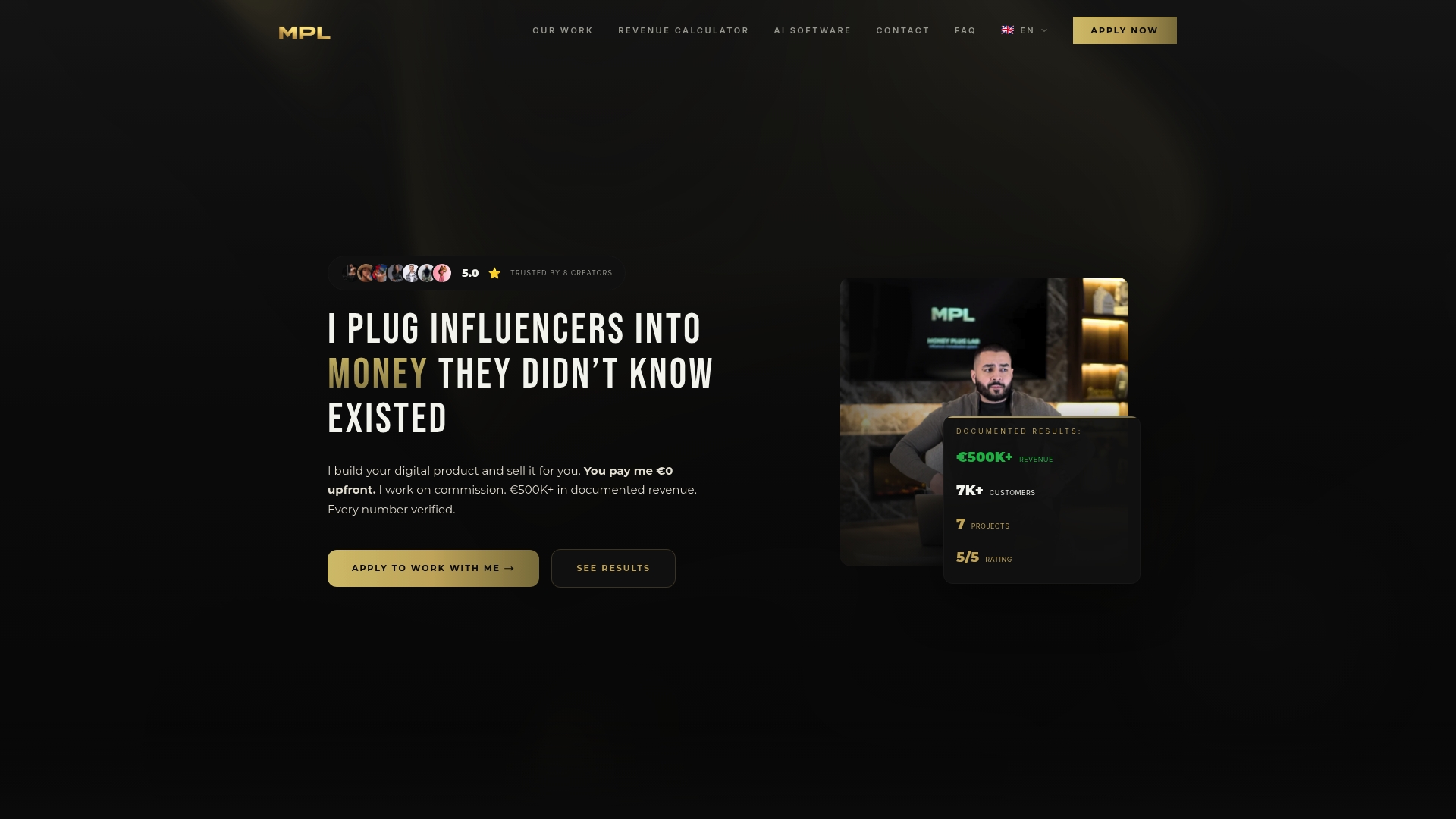
We build the entire payment and launch infrastructure for creators on a commission basis, which means we only get paid when your product sells. That includes the installment and checkout decisions covered above, applied directly to your audience and your price point.
- Payment infrastructure setup, including installment and split-pay checkout options
- Checkout integration tested against failed autopay and refund scenarios
- Refund handling built in before launch day, not improvised after
- Full campaign launch management, from sales copy to paid advertising
If you are a creator weighing how to price and structure your next launch, see how PlugReach handles the payment side for you.
FAQ
What are the different types of payment plans?
The main categories are pay-in-4 BNPL splits, merchant monthly or installment financing, point-of-sale installment loans, credit-card installment programs, and formal repayment plans for student loans or tax debt. Each differs on term length, typical purchase size, and whether interest or fees apply.
Do payment plans hurt credit score?
It depends on the provider and plan type: many pay-in-4 BNPL products are not consistently reported to credit bureaus, while point-of-sale installment loans and formal repayment plans often are. The CFPB’s market review also flagged inconsistent disclosure practices across BNPL providers, so checking the specific provider’s terms matters more than assuming one rule applies to all.
What is the monthly payment for a $3,000 loan?
It depends entirely on the term and rate: split interest-free over four payments, a $3,000 purchase comes to $750 per payment with no added cost. Financed over 12 months at a representative 15% APR, the monthly payment runs close to $271, with total cost near $3,252.
What apps will pay a bill instantly?
This question usually points to payment or BNPL apps rather than bill-pay services, and providers like PayPal, Klarna, Affirm, Afterpay, Zip, and Sezzle let you split an eligible purchase into payments at checkout rather than paying a bill directly. For an actual bill, check whether the biller accepts one of these providers at checkout or offers its own installment option.
How do I know if a payment plan’s total cost is worth it?
Multiply the monthly payment by the number of months and add any disclosed fees, then compare that total to the purchase price if you paid in full. If the total cost is higher than the sticker price and you have the cash available, paying in full usually costs less overall.