$500,000 Launches: Creator Legal Disclaimers to Cut Chargeback Risk
$500,000 Launches: Creator Legal Disclaimers to Cut Chargeback Risk

A creator legal disclaimer has one job: tell your audience exactly what your relationship to your content and your money is, before they buy, click, or click “I accept.” That means a short, visible disclosure at the point of sponsorship or sale, backed by a fuller policy page and a stored record of what the buyer saw and agreed to. Skip the visible part and rely only on a buried footer page, and you’re not actually protected. Placement is not paperwork. It’s the whole point.
TL;DR:
- Disclosures must appear directly next to the moment of trust or purchase, not just on a footer page, to meet legal and FTC standards.
- Each category of risk, like sponsorship, copyright, or product claims, requires its own clear, concise disclosure tailored to the specific context.
- Builders should regularly review and update disclaimers whenever offerings, platforms, or laws change, with a documented version history for accountability.
- Disclaimers are evidence of notice but do not provide absolute protection, especially against copyright claims or undisclosed material connections.
- Operational launch workflows must embed disclosures into every step, including checkouts, receipts, and acceptance records, to ensure compliance at volume.
Table of Contents
- What Are Creator Legal Disclaimers, Exactly?
- Copyable Disclaimer Templates for Creators
- How to Write and Customize a Disclaimer: A Step-by-Step Checklist
- How to Meet the “Clear and Conspicuous” Standard
- What Disclaimers Can and Cannot Protect You From
- Operational Checklist for Launches, Drops, and Ongoing Content
- How a Managed Launch Handles Disclaimers and Checkout
- Differences in Disclaimer Requirements by Jurisdiction or Platform
- Keeping Disclaimers Current as Laws and Platforms Change
- Practical Lessons From Watching Creator Launches Up Close
- Money-plug Builds the Compliance Layer Into Your Launch, Not Around It
- Sources
- FAQ
What Are Creator Legal Disclaimers, Exactly?
A disclaimer is a written statement that limits what your audience can reasonably assume about your content, your product claims, or your financial relationships. In creator work, that covers a handful of distinct jobs: disclosing paid partnerships, capping liability on advice or fitness programs, clarifying who owns the material you’re showing, and setting expectations around refunds and results.
Most creators lump all of this into one generic “disclaimer page” linked in a footer nobody reads. That’s the wrong model. Content creator liability doesn’t work like a single blanket waiver. The FTC’s endorsement guidance treats sponsorship disclosure as a moment-of-contact requirement, not a page you can park somewhere and forget. A legal notice for influencers has to show up exactly where the reader is deciding whether to trust or buy something, and a separate, more complete disclaimer page still matters for everything a single sentence can’t cover: warranty limits, jurisdiction, copyright notices, and the general “this is not professional advice” language that YMYL content (health, money, legal topics) usually needs.
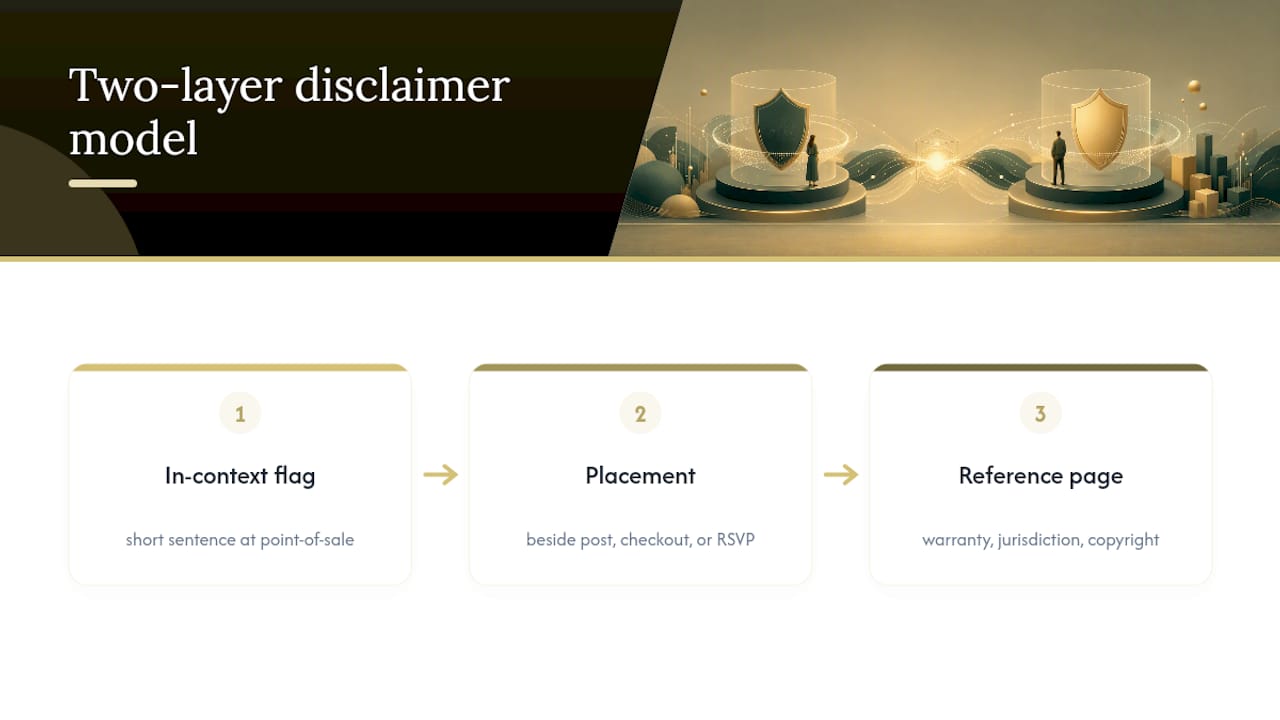
Think of it in two layers. Layer one is the in-context flag: a sentence next to the sponsored post, the checkout button, or the RSVP form. Layer two is the reference document: a full disclaimer page that governs everything your in-context flags point back to. You need both, and most creators only have layer two, which is precisely backward.
Copyable Disclaimer Templates for Creators
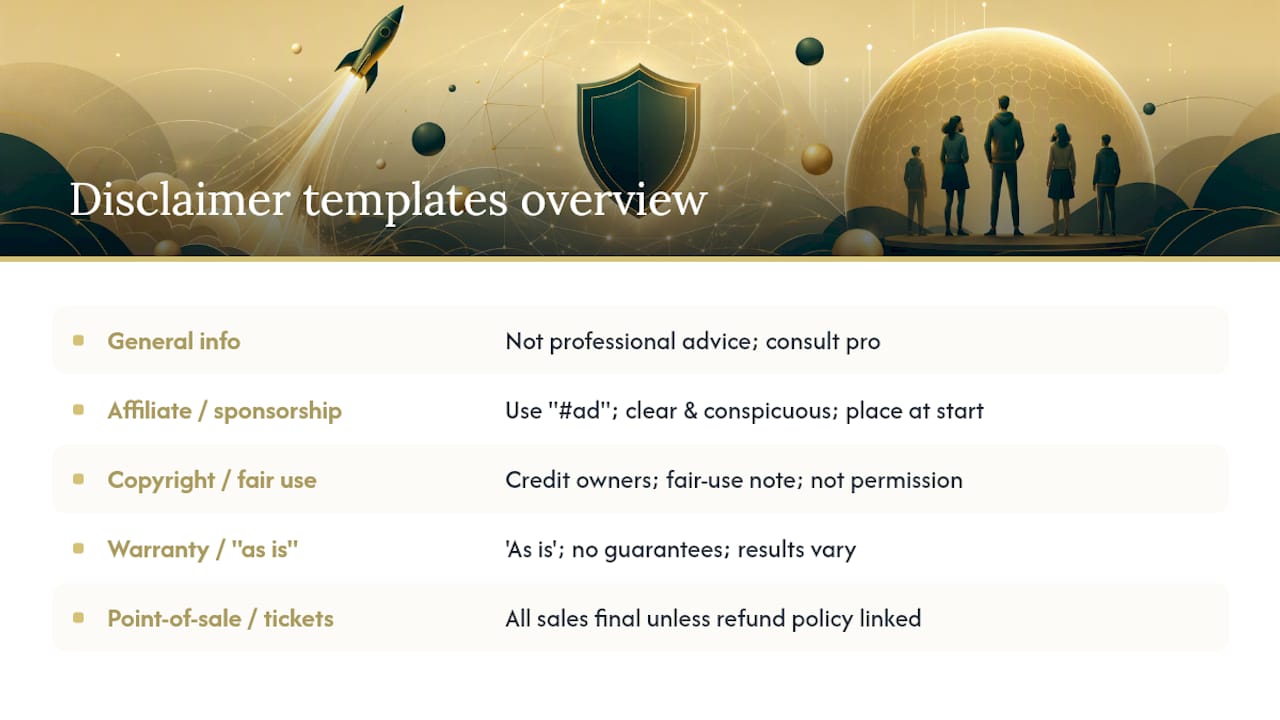
You don’t need a lawyer to draft a first version. You need the right structure, then a lawyer to check the finished product against your specific risk. Here are five templates you can adapt today.
General information disclaimer (blog posts, course landing pages, YouTube descriptions):
“The information provided on this site is for general informational purposes only and does not constitute professional, medical, financial, or legal advice. Always consult a qualified professional before acting on anything discussed here.”
Affiliate or sponsorship disclosure (must be “clear and conspicuous” under FTC rules, not just present somewhere on the page):
“This post contains affiliate links. If you purchase through them, I may earn a commission at no extra cost to you. #ad” or, for paid partnerships specifically: “This content is a paid partnership with [Brand].” Put this at the start of a caption or video, not buried after three paragraphs or a dozen hashtags.
Copyright attribution and fair use note:
“Some images/clips used in this content belong to their respective owners and are used under fair use for commentary/education. All rights remain with the original creators.” This is worth having, but treat it as a courtesy note, not armor. It doesn’t grant you permission to use anything.
Warranty and “as is” language for courses and digital products:
“This program is provided ‘as is’ without warranties of any kind, express or implied. Results vary by individual effort, starting point, and adherence. [Creator/Brand] makes no guarantee of specific outcomes, including weight loss, income, or performance results.” A fitness program disclaimer almost always needs a supplemental line: “Consult a physician before beginning any exercise program, particularly if you have a pre-existing condition.”
Point-of-sale and event ticket disclaimer:
“All sales are final unless otherwise stated in our refund policy. By completing this purchase, you agree to our Terms of Service and acknowledge the refund policy outlined at [link].” That last clause is your bridge to refund policy wording, and it should be a specific, linked document, not a vague promise buried in an FAQ.
None of these are one-size-fits-all. A supplement affiliate link needs stronger health language than a software affiliate link. A live event ticket needs cancellation terms a downloadable PDF doesn’t.
How to Write and Customize a Disclaimer: A Step-by-Step Checklist
Templates get you 80% there. The last 20% is matching the wording to your actual exposure, and that takes a short, deliberate process rather than guesswork.
- Map your risk categories first. List every place you make a claim, take money, or use someone else’s material: sponsored posts, affiliate links, health or finance content (YMYL), copyrighted clips, and product sales. Each category usually needs its own disclosure line, not one master paragraph trying to cover everything.
- Draft the core elements for each disclaimer. At minimum, include: scope (what it covers), a limitation of liability statement, an effective date, contact information, and, where the disclaimer might get contested, a governing law clause naming which state or country’s law applies.
- Write for a tenth grade reading level. A disclaimer full of “heretofore” and “notwithstanding” impresses no one and protects you less, because courts and regulators increasingly weigh whether disclosures were actually understandable to an ordinary reader.
- Check prominence on both mobile and desktop. A disclaimer that renders as a two-point-font footnote on a phone screen fails the “clear and conspicuous” standard regardless of what it says. Test the actual rendered page, not just the draft in your CMS editor.
- Set a review trigger, not just a review date. Revisit disclaimer wording whenever you change your monetization model, expand into a new country, or start covering a new content category (say, moving from fitness tips into supplement sales).
- Know when to loop in a lawyer. Bring in legal review when you’re forming a business entity, signing a brand contract with indemnity language, or scaling past a few thousand dollars a month in creator revenue. Ask specifically for a review of your indemnity clauses and your governing law selection, not just a general “look this over.”
Pro Tip: Put your sponsorship disclosure in the first line of a caption or the first three seconds of a video. The FTC has flagged disclosures placed after a “see more” cutoff or buried in a hashtag string as insufficient, since a typical viewer never reaches them.
How to Meet the “Clear and Conspicuous” Standard
“Clear and conspicuous” isn’t a legal term of art with one fixed rule. It means a reasonable person, without hunting, would notice and understand the disclosure before they act on it. In practice, that requirement plays out differently depending on where the disclosure lives.
A footer disclaimer page still has a role: full policy language, refund terms, warranty disclaimers, and jurisdiction clauses belong there. But an in-content short disclosure has to live next to the decision it’s warning about. Sponsored content needs the flag before or during the pitch, not after. A checkout page needs the disclaimer above the final purchase button, not in a linked terms document a buyer never opens.
Point-of-sale integration matters more than most creators realize:
- Add a one-line disclosure directly above the “Buy Now” or “Complete Purchase” button, not just in linked Terms.
- Include an unchecked acknowledgment checkbox for buyers to actively confirm, rather than a passive statement they can scroll past.
- Send a confirmation email or receipt that repeats the key terms (refund window, program access length, disclaimer language).
- Archive a timestamp of what version of the disclaimer a buyer saw and accepted, stored with the order record.
Platform placement follows the same logic. On YouTube, a disclosure belongs in the first line of the description and, ideally, spoken or shown on-screen in the first few seconds, not just pinned in a comment nobody expands. Industry guidance for creator commerce recommends tying disclosures directly to auditable acceptance records, specifically to reduce disputes on small-ticket sales and live events, where chargebacks and “I didn’t know” claims are common.
What Disclaimers Can and Cannot Protect You From
A disclaimer is evidence of notice. It is not a force field. That distinction trips up more creators than any other part of this topic.
Under FTC rules, if you have a material connection to a brand, financial or otherwise, you must disclose it clearly, and the FTC’s own guidance makes clear that a technically-present disclosure buried where nobody sees it doesn’t satisfy the requirement. That’s an affirmative disclosure duty, not something a generic waiver can substitute for.
On copyright, the myth runs deeper. Plenty of creators slap “I do not own the rights to this content” under a video and assume it’s a legal shield. It isn’t. The U.S. Copyright Office is explicit that a disclaimer creates no fair use defense on its own, and legal commentary goes further: that kind of disclaimer can actually work against you, since it’s written proof you knew the material wasn’t yours when you used it. If you want to use someone else’s work, get permission or a license, or make sure your use is genuinely transformative under the fair use factors, not just labeled.
So what does help?
- A visible disclosure gives you evidence you gave notice, which matters in disputes over deceptive advertising claims.
- Written permission or a license protects you against copyright claims; a disclaimer does not.
- Contracts with brands should allocate indemnity explicitly rather than assuming the brand absorbs all risk when they control the script or product claims.
- Forming an LLC separates your personal assets from business liability, since operating as a sole proprietor exposes everything you own personally to a business claim.
- Specialist creator insurance fills gaps that platform terms of service don’t cover, and creators who lean entirely on platform safeguards are usually the ones caught flat-footed when something goes wrong.
Operational Checklist for Launches, Drops, and Ongoing Content
Treat disclaimer compliance as a workflow, not a one-time document. Here’s how it should move through a typical product launch.
- Pre-launch: Map every product and offer against a disclosure type (affiliate, sponsorship, health claim, digital product warranty). Build the checkout disclaimer and refund policy before the sales page goes live, not after the first complaint.
- Live: Confirm in-content disclosures are actually visible on mobile, not just desktop previews. Make sure receipts include your legal business name, contact details, and a link to the return policy.
- Post-launch: Archive every acceptance record, timestamps included, tied to the buyer’s order. Set a recurring calendar reminder, quarterly is reasonable for an active creator business, to re-check disclosure wording against current offers.
| Launch Stage | Core Action | Where It Lives |
|---|---|---|
| Pre-launch | Draft checkout disclaimer and refund terms | Sales page, checkout flow |
| Live | Verify disclosure visibility on mobile and desktop | In-content post, video description, checkout button |
| Post-launch | Archive timestamped acceptance records | Order metadata, email receipts |
A short in-post disclosure might read: “Sponsored content, paid partnership with [Brand].” A receipt disclaimer might read: “Purchase confirms acceptance of Terms and Refund Policy at [link]. Contact [email] for support.” Simple, repeatable, and auditable beats clever every time.
How a Managed Launch Handles Disclaimers and Checkout
Running disclaimers correctly across a real launch, checkout flow, receipts, RSVP confirmations, timestamped consent, means treating compliance as part of the sales system, not an afterthought bolted onto a landing page. That’s operational work: wiring a disclosure line above the buy button, making sure receipts carry the right seller information, and archiving acceptance records automatically instead of hoping nobody asks.
The agency builds these flows directly into the launches it runs for creators, across programs that have generated substantial tracked revenue. When the volume gets that high, manual disclosure tracking breaks down fast. A creator running a first small launch can often handle disclosures manually with a careful checklist. A creator scaling into multiple weekly sales, live events, or a paid community usually benefits from a partner who builds the compliance layer into the launch infrastructure itself, rather than retrofitting it after a dispute.
Differences in Disclaimer Requirements by Jurisdiction or Platform
There’s no single global disclaimer law, and that’s the part that trips up creators building an international audience. U.S. creators fall under FTC endorsement guidance, which is specific about material connection disclosures for sponsored content. The European Union layers on its own consumer protection and digital services rules, which tend to require even more explicit commercial-intent labeling than U.S. law does. If you sell to buyers in the EU, UK, Canada, or elsewhere, check that jurisdiction’s advertising standards body rather than assuming U.S. rules travel with you.
Platforms add their own layer on top of the law. Instagram and TikTok both offer built-in “Paid Partnership” tags, and using them satisfies part of your disclosure duty, but not all of it. If a caption still implies an organic opinion instead of a sponsored one, the platform tag alone may not be a “clear and conspicuous” disclosure under FTC standards. YouTube’s paid promotion checkbox works the same way: useful, not sufficient on its own.
Health, finance, and legal content (YMYL) carries a stricter bar everywhere. If you’re producing anything that touches personal health information, be careful about how specific you get. HHS guidance on HIPAA is aimed at covered entities like clinics rather than independent creators, but the underlying caution, don’t imply you’re handling protected health information or offering medical diagnosis, still applies directly to fitness and wellness creators giving individualized advice.
Keeping Disclaimers Current as Laws and Platforms Change
Disclaimer language isn’t a “set it and forget it” document. Regulators update guidance, platforms change their labeling tools, and your own business changes shape faster than either of those.
Build a light review cadence instead of waiting for a problem to force one. A quarterly check is reasonable for most active creators: read through your current disclosures, compare them against your current offers, and confirm nothing has drifted out of sync (a common failure is adding a new affiliate category or a new country’s audience without updating the disclosure that covers it).
Watch for three triggers that should force an off-cycle review regardless of your calendar: a change in FTC or platform-specific disclosure guidance, expansion into a new country’s audience or a new sales channel, and any shift in your monetization model (adding sponsorships when you previously only sold your own products, for instance). Subscribe to updates from the FTC’s business guidance page directly rather than relying on secondhand summaries, since enforcement priorities shift and older blog posts about disclosure rules go stale fast.
Version your disclaimers the way you’d version software. Keep a dated record of what wording was live on what date, tied to your order archive. If a dispute ever surfaces from a purchase made eight months ago, you want to know exactly what disclosure that specific buyer saw, not just what your current page says today.
Practical Lessons From Watching Creator Launches Up Close
The mistake that shows up most often isn’t a missing disclaimer page. It’s a disclaimer that exists but sits somewhere nobody looks, buried in a footer while the actual sale happens on a page with no disclosure in sight. Long legal pages feel thorough and protect almost nothing if the buyer never saw them before clicking “buy.”
Short, visible disclosures tied to a timestamped record beat comprehensive legal documents every time a dispute actually happens. If you take one action after reading this, add a one-line disclosure directly above your checkout button today, and confirm your receipts capture the date it was shown.
*— Money
Money-plug Builds the Compliance Layer Into Your Launch, Not Around It
Most creators bolt disclosures onto a launch after it’s already built, patching checkout pages and receipts under deadline pressure. Money-plug does the opposite: disclosure language, checkout disclaimers, and RSVP confirmations get built into the launch infrastructure from day one, alongside the sales copy, video sales letters, and payment setup.
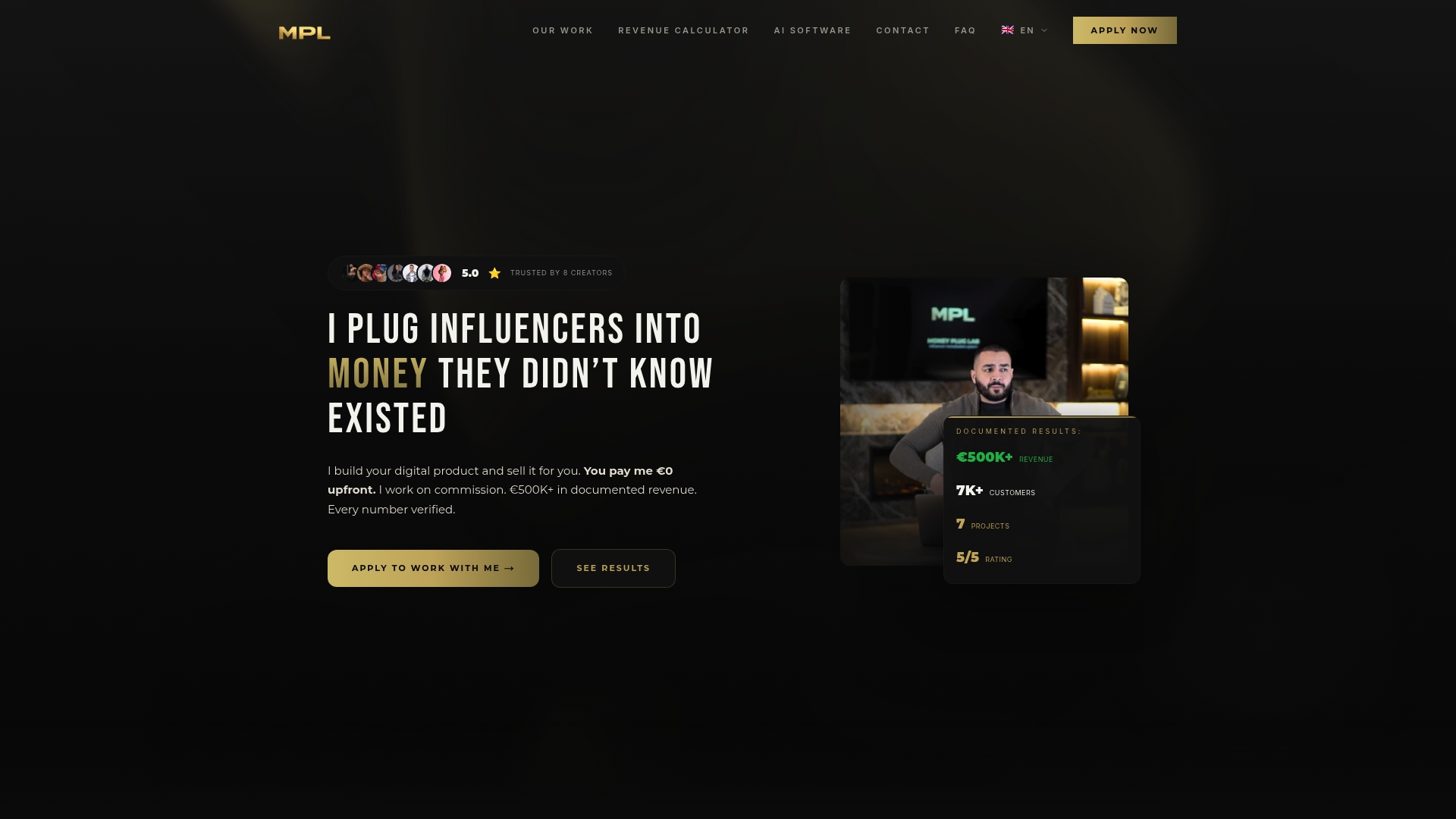
That matters because a launch moving thousands of units in ten days, the kind Money-plug has run for creators generating over $500,000 in tracked revenue, can’t afford to retrofit compliance after the fact. Refund terms, receipt details, and acceptance timestamps need to work at volume from the first sale, not the fiftieth. The agency operates on a revenue share basis, handling the operational work so you’re not choosing between growing fast and staying covered. If you’re planning a launch and want the disclosure and checkout mechanics built in rather than bolted on, start with Money Plug™ and see how a managed launch handles it end to end.
This article is general information, not a substitute for advice from a qualified lawyer. Consult a qualified legal professional about your own circumstances before acting on anything here.
Sources
- FTC: Endorsements, Influencers, and Reviews
- U.S. Copyright Office: Fair Use
- LegalClarity: Does an ‘I do not own copyright’ disclaimer protect you?
FAQ
What Is Good Wording for a Disclaimer?
Keep it plain and specific: state what the disclaimer covers, disclose any payment or affiliate relationship in the first sentence, and avoid vague legal jargon that a typical reader wouldn’t understand.
How Do I Write a Legal Disclaimer?
Map your risk categories first (sponsorship, copyright, product claims), then draft scope, liability limits, an effective date, and contact information for each category, placing the shortest version directly next to the relevant content or purchase button.
What Should I Write in a Copyright Disclaimer?
State clearly whether material is used with permission, under license, or under a fair use claim for commentary or education, but understand that this note is a courtesy statement, not legal protection on its own.
Is a Generated Disclaimer Legally Binding?
A disclaimer, generated or hand-written, mainly serves as evidence of notice rather than a binding waiver of liability, and it cannot override consumer protection law, FTC disclosure requirements, or copyright law regardless of its wording.
Does Saying “I Do Not Own This Content” Protect Me From Copyright Claims?
No. That phrase provides no legal defense, and courts and legal commentators have noted it can even work against a creator as evidence they knew the material belonged to someone else.