Balkan Ad Costs 2026: €0.15–€2.50 Search CPCs, €4–€9 Meta CPMs
Balkan Ad Costs 2026: €0.15–€2.50 Search CPCs, €4–€9 Meta CPMs

Expect Google Search CPCs of roughly €0.15 to €2.50 depending on industry and country, Meta CPMs in the low single digits, and a minimum functional monthly budget of €300 to €1,500 before you can trust the data. Tourism and hospitality sit at the cheap end; legal and real estate sit near the top. Costs swing hard by season, city, and how much competition your niche actually has.
TL;DR:
- Google Search CPCs in the Balkans range from €0.15 for low-competition tourism keywords up to €2.50 for legal and real estate, influenced by season and competition.
- Meta CPMs typically fall between €4 and €9, with conversion costs varying based on creative quality and audience targeting.
- Budgeting for a three-month testing period and avoiding budget cuts during the learning phase is crucial for stable results and better cost control.
- Ad costs fluctuate mainly due to auction size, low query volume, and seasonality, with diaspora targeting often increasing CPMs three to five times higher.
- Video and social ad formats are set to become more expensive, especially in tourism-heavy markets, as regional ad spend shifts toward short-form content through 2026 and beyond.
Table of Contents
- How Much Do Balkan Ad Costs Really Run By Channel?
- What Actually Determines Your Ad Costs in the Balkans?
- Agency Fees, Setup Costs, and Splitting Your Budget
- Building a Balkan Ad Budget: Templates by Business Size
- Cost-Reduction Tactics That Actually Move the Needle
- Where Balkan Ad Pricing Is Headed Through 2026 and Beyond
- What We’ve Learned Running Balkan Campaigns for Creators
- How Money-plug Handles the Media Side So You Don’t Have To
- Sources
- FAQ
How Much Do Balkan Ad Costs Really Run By Channel?
Balkan advertising costs still undercut Western Europe by a wide margin, but “cheap” doesn’t mean flat across every platform. The gap between a Sarajevo hospitality campaign and a Zagreb law firm campaign can be ten times wider than most first-time advertisers expect.
Google Search stays the most predictable channel for cost planning, because Google publishes bid data in real time and competition is visible before you spend a dinar, lev, or euro. Regional pricing data puts tourism-related search terms as low as €0.15 to €0.80 per click, while real estate and legal keywords in the same markets can climb toward €2.50 per click. That five-to-fifteen-fold spread exists because low-competition hospitality terms have dozens of small operators bidding modestly, while legal and property keywords attract a handful of well-funded competitors fighting over a tiny pool of monthly searches.
Meta Ads (Facebook and Instagram) price on CPM, not CPC, which confuses a lot of advertisers coming from search. A €4 to €9 CPM is typical across most Balkan capitals, and how that CPM turns into cost-per-click or cost-per-acquisition depends entirely on your creative and audience quality. A weak ad with a €6 CPM can produce a €1.50 CPC. A strong one with the same CPM can land closer to €0.40. This is why creative quality matters more on Meta than on Search, where intent does most of the work for you.
TikTok, display, and video run cheaper on a per-impression basis but need volume to prove themselves. TikTok CPMs in the region often sit below Meta’s, sometimes €2 to €5, but conversion rates lag unless your product fits short-form video naturally (fitness, beauty, food, lifestyle coaching). Display and programmatic video are best treated as a brand-awareness layer rather than a direct-response tool in a market this size. Channel choice also tracks business type: e-commerce and visually driven brands tend to see stronger ROAS on Meta, while service businesses like law firms or clinics perform better on Search, because search captures people who already know what they want.
Local publisher placements add a fourth option many advertisers overlook. Balkan tourism and lifestyle publications sell monthly sponsorship packages, and rates spike seasonally:
- Tier-one national tourism sites: roughly €200 to €600/month for a sidebar or newsletter slot
- Regional lifestyle blogs: €80 to €250/month, often negotiable for longer commitments
- Peak-season placements (May through September for coastal markets): can run 30 to 50% above off-season rates
- Sponsored content or native articles: typically priced separately, often €150 to €400 per piece
None of these numbers hold still. A Belgrade fitness coach running Meta ads in January pays a fraction of what a Split hotel pays for the same CPM in July. Treat every range above as a starting assumption you validate with your own data within the first few weeks.
What Actually Determines Your Ad Costs in the Balkans?
Auction size is the root cause behind most of the cost volatility advertisers see in this region. Western European and US markets have millions of daily auctions per keyword category, which smooths out pricing. Balkan countries, even the larger ones, have thin query volume.
Quality Score still does the heavy lifting on Search. Google rewards ads and landing pages that match search intent tightly, and in a low-volume market, that reward is amplified because there are fewer advertisers to dilute the effect. A Quality Score of 7 or 8 instead of 4 or 5 can cut your effective CPC by a third, sometimes more, simply because Google discounts your bid to reflect relevance.
Diaspora targeting is its own animal. Running ads toward Balkan diaspora communities in Germany, Austria, Switzerland, or the US means competing in those countries’ ad auctions, not the home market’s. CPMs jump accordingly, often three to five times higher than domestic rates. It’s worth the premium when your product (money transfer services, cultural products, travel packages home) has a diaspora-specific value proposition. It’s a waste when you’re just hoping for volume.
Seasonality hits tourism-adjacent categories hardest. Coastal cities in Croatia, Montenegro, and Albania see CPCs and CPMs climb 40 to 60% from May through August as every hotel, tour operator, and rental agency fights for the same searchers. Capital cities without a tourism season (Belgrade, Sarajevo, Skopje) stay comparatively flat year round, which makes them better testing grounds if you want stable data before scaling into seasonal markets.
Meta’s learning phase punishes impatience. The platform needs roughly 50 conversion events per ad set within a week to exit learning and optimize properly. In low-volume Balkan markets, that threshold can take much longer to hit than it would in the US or UK, and practitioner guidance recommends budgeting for a 60 to 90 day testing window rather than judging results after two weeks.
Pro Tip: Don’t shrink your daily budget to “save money” during a slow week. A budget cut mid-learning-phase resets the algorithm’s progress, and you’ll pay more per result once it restarts than if you’d left it alone.

Agency Fees, Setup Costs, and Splitting Your Budget
Hiring help costs less in the Balkans than almost anywhere else in Europe, but the range is wide enough that “an agency” tells you nothing useful until you know which tier you’re buying.
- Execution-only freelancers or small shops: €120 to €500 per month. You get campaign setup and basic optimization, minimal strategy, and almost no creative production.
- Full-service agencies: €500 to €2,000+ per month, covering strategy, creative, reporting, and ongoing optimization across two or three channels.
- Specialist paid-media shops: premium pricing above €2,000/month, but specialization often means faster scale because there’s no confusion over who owns which part of the funnel, unlike a generalist agency juggling SEO, social posting, and ads under one contract.
Pricing models split two ways: flat monthly fees and percentage-of-ad-spend (commonly 10 to 20%). Flat fees favor advertisers with modest budgets, since a 15% fee on a €300/month spend barely covers an agency’s time. Percentage models make more sense once monthly spend clears €3,000 to €5,000, where the fee scales with the actual workload of managing bigger budgets.
One-time setup costs deserve their own line item. Proper conversion tracking, GA4 configuration, pixel implementation, and a first round of ad creative typically runs €500 to €1,500 as a one-time cost. This is the single highest-leverage expense in the entire budget, because a campaign without clean tracking is a campaign you can’t actually optimize, no matter how much media spend you throw at it.
Larger advertisers running multi-channel campaigns often see that management share drop below 20% as media spend scales up while fixed management costs stay roughly flat.
Building a Balkan Ad Budget: Templates by Business Size

Three months is the realistic minimum testing window for any new Balkan campaign, long enough to clear Meta’s learning phase and gather enough Search data to separate a real trend from random noise. Anything shorter and you’re making decisions on statistical fumes.
Here’s how monthly budgets typically break down by business size, combining ad spend with management and production costs:
| Business size | Monthly ad spend | Management/production | Total monthly budget |
|---|---|---|---|
| Micro (solo operator, local service) | €150 to €300 | €100 to €200 | €250 to €500 |
| Small (local business, 1 to 2 locations) | €400 to €850 | €300 to €600 | €300 to €1,500 |
| Mid-size (regional brand, multiple channels) | €500 to €3,000 | €500 to €1,200 | €1,500 to €2,000+ |
| Large (national or multi-country) | €3,000+ | €500 to €2,000+ | €2,000+ |
These bands roughly track regional surveys of total marketing spend by business size, adjusted here to separate media from management. A micro business spending under €250 total is usually better off doing organic content first, since ad spend that thin rarely clears the noise floor.
Building your own budget takes four steps:
- Set a 90-day testing window and commit to it before launch, not after week two when results look shaky.
- Allocate your minimum functional budget by size class from the table above, weighted toward media early on.
- Watch cost-per-lead or cost-per-sale weekly, but only make structural changes (new creative, new audience) every two weeks minimum.
- Scale spend only after you hit a stable CPA for two consecutive weeks, not after one good day.
Tourism operators who front-load their entire annual budget evenly across twelve months consistently underperform the ones who concentrate spend where demand actually is.
Cost-Reduction Tactics That Actually Move the Needle
Fixing your measurement is the single highest-return move available, and it’s not close. One regional study found that roughly 44% of Balkan businesses run ads without proper conversion tracking, which means nearly half the advertisers in this market are optimizing campaigns based on guesswork instead of data. Fix that before touching bid strategy or creative.
A practical order of operations:
- Install GA4 and conversion events before your first dollar of ad spend, not after week three.
- Run landing-page microtests (headline swaps, form length, page speed) since these often move conversion rate more than any bid change.
- Build three to five creative variants per ad set and let the small-volume auction tell you which one wins within two weeks, not two days.
- Layer in conversion-optimized lookalike audiences only after you have at least 50 to 100 real conversions to build them from.
This sequence, GA4 setup, landing-page tests, creative variants, then lookalikes, tends to produce faster ROAS gains than simply raising the budget and hoping volume smooths out the problems underneath.
Audience strategy needs a tradeoff decision, not a default setting. Narrow, tightly geo-targeted audiences waste less impression volume but also slow down how fast you accumulate the conversion data platforms need to optimize. Broader targeting with strong creative usually outperforms narrow targeting with weak creative in low-volume markets, because the algorithm needs raw signal more than it needs precision.
Pro Tip: Dayparting (running ads only during hours when your audience actually converts) can trim wasted spend by a real margin, but apply it only after you have two to three weeks of hourly performance data. Turning it on day one just slows down the learning phase further.
Bid strategy should stay conservative for the first month. Manual or capped bidding gives you cost control while the algorithm is still learning; automated bidding tends to perform better only after it has enough conversion volume to work with.
Where Balkan Ad Pricing Is Headed Through 2026 and Beyond
Digital ad spend across Central and Eastern Europe keeps climbing, and the format mix is shifting in a direction that will make video inventory more expensive relative to static formats.
By the numbers: Europe’s digital ad market grew roughly 10.5% according to IAB Europe’s AdEx Benchmark, with video and social formats driving most of that lift. Statista’s forecasts for Central and Eastern Europe project video and TV formats capturing a growing share of ad spend through 2030.
That growth doesn’t land evenly. IAB Europe’s data shows retail media and social formats accelerating fastest, which tracks with what regional advertisers are already seeing: Meta and TikTok inventory getting more competitive year over year, while Search stays comparatively stable because query volume grows more slowly than social usage.
For Balkan advertisers, the practical implication is straightforward: video CPMs will likely keep climbing faster than Search CPCs over the next two to four years, as more regional advertisers shift budget toward Reels, TikTok, and short-form content to chase the same growth curve IAB Europe is tracking at the continental level. Markets with strong tourism sectors (Croatia, Montenegro, Albania’s coast) will feel this first, since travel brands were already early adopters of video-first advertising.
The window for cheap video inventory in this region is closing, not gone. Advertisers who lock in creative testing and audience-building work now, while CPMs are still low relative to Western Europe, will have a real cost advantage over competitors who wait until video becomes the default channel everyone fights over.
What We’ve Learned Running Balkan Campaigns for Creators
The biggest misconception we run into is advertisers assuming “cheap market” means “cheap mistakes.” It’s the opposite. Low query volume means every early error compounds faster, because you don’t have the traffic cushion to average out a bad landing page or a weak hook.
Across the launches we’ve managed, one pattern holds regardless of niche: campaigns that treated the first month as a measurement exercise, not a sales push, consistently outperformed campaigns that chased volume from day one. Some campaigns have generated thousands of sales within days, but that performance relied on thorough tracking and creative testing completed well before the campaign launch.
Underfunding the test phase is the most common way advertisers sabotage themselves here. A budget too thin to clear the learning phase produces data that looks like a verdict but is really just noise.
— Money
How Money-plug Handles the Media Side So You Don’t Have To
Some agencies work on a revenue share model with zero upfront costs, aligning their incentives directly with your sales rather than your ad spend.
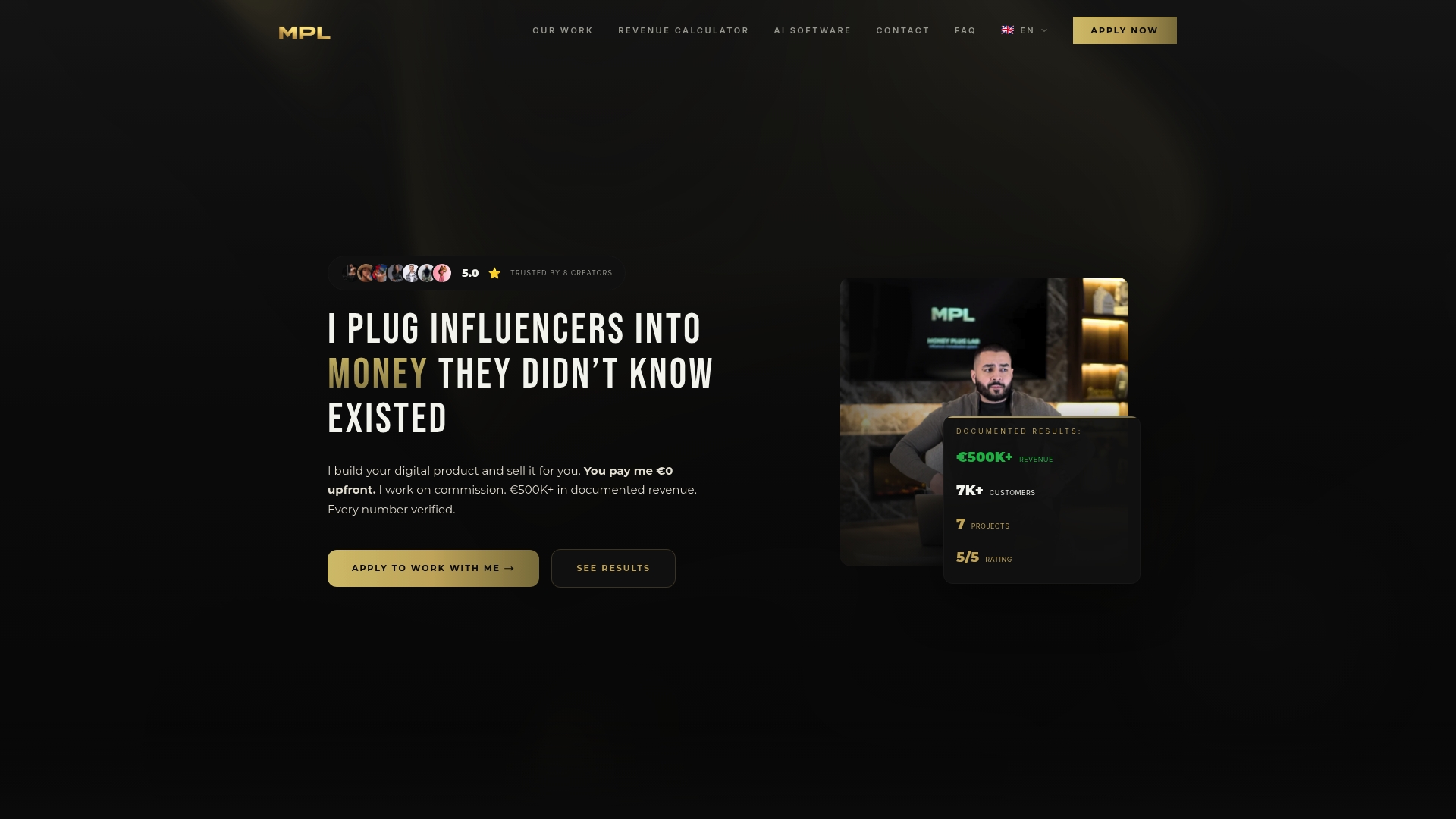
Such a service structure can include audience research, pricing strategy, sales copywriting, video sales letters, launch campaign management, payment infrastructure, and post-production for paid advertising, helping remove the guesswork for creators and coaches building paid programs or communities. If you’re weighing whether to run this yourself or bring in a partner who only gets paid when your launch does, start by looking at what digital product monetization with Money-plug actually involves for creators in your position.
Sources
The figures in this article draw on a mix of pan-European market data and regional practitioner reporting current through 2026:
- Ad spend in Central and Eastern Europe (media) — Statista forecasts
- Europe digital advertising market — MarketDataForecast
FAQ
What Is a Realistic Minimum Budget for Balkan Ads?
A measurable test campaign generally needs €250 to €1,500 per month depending on business size and channel, enough to clear Meta’s learning phase and gather usable Search data. Anything below €250 rarely produces data you can act on.
How Much Does Google Ads Cost in the Balkans?
Search CPCs typically range from €0.15 for low-competition tourism keywords to €2.50 for competitive categories like legal and real estate. The exact rate depends heavily on city, season, and how many competitors bid on the same terms.
Should I Hire an Agency or Manage Balkan Ads Myself?
DIY works for micro businesses with simple offers and time to learn the platforms. Full-service agencies, typically €500 to €2,000+ per month, make more sense once you’re running multiple channels or launching a product where a mistake costs more than the agency fee. Money-plug operates on revenue share instead, so creators pay nothing upfront regardless of which path they’d otherwise choose.
Why Are My Meta Ad Results Inconsistent in Small Balkan Markets?
Low query and conversion volume means the algorithm needs longer to exit its learning phase, often 60 to 90 days in thinner markets rather than the one to two weeks common in larger economies. Cutting budget or pausing campaigns mid-test resets that progress and makes results look worse than they are.
Which Balkan Ad Formats Will Get More Expensive First?
Video and social formats are climbing fastest, based on continental growth data from IAB Europe and Statista’s format-share forecasts through 2030. Coastal tourism markets will likely see the increase first, since travel advertisers already lean heavily on video.