Creators: Launch Your Beauty Course With No Upfront Agency Cost
Creators: Launch Your Beauty Course With No Upfront Agency Cost
Every successful beauty course launch follows the same sequence: validate the idea, define measurable outcomes, structure the curriculum, build an audience before you sell, price it right, launch with real assets, then iterate. Skip validation and the rest doesn’t matter. Your next move today is small: put up a landing page or run a five-question poll to your audience and see if anyone actually wants what you’re planning to build.
TL;DR:
- Validating demand with a simple landing page, paid ads, or a pre-sale typically reveals whether a course idea is worth pursuing before investing heavily.
- Structuring learning outcomes around clear, specific transformations ensures modules and assessments directly support student results, avoiding unnecessary content.
- Hybrid delivery models that combine online theory with scheduled in-person practicals are now standard, but require careful planning of costs and accreditation considerations.
- Building an engaged audience through mini-lessons, demos, and partnerships increases the likelihood of a successful launch and reduces reliance on expensive cold advertising.
- Partnering with a managed launch agency can reduce workload and improve sales results, especially for creators who prefer to focus on curriculum and teaching.
Table of Contents
- Step 1: Validate Demand Before You Build the Beauty Course
- How Do You Design Learning Outcomes for a Beauty Course?
- What’s the Right Format and Duration for a Beauty Course?
- How Do You Build an Audience Before Launch?
- How Should You Price a Beauty Course?
- What Do You Need for Launch Day?
- How Do You Deliver and Improve a Beauty Course After Launch?
- Funding, Partnerships, and Accreditation Options
- What a Full-Service Launch Partner Actually Does
- Why Education Is the Best Long-Term Asset in Beauty
- Ready to Launch Your Beauty Course Without Doing It Alone?
- Sources
- FAQ
Step 1: Validate Demand Before You Build the Beauty Course
Building a full curriculum before anyone has asked for it is the single most common way a beauty course launch fails. Test the idea with the least amount of work possible, then let real behavior, not your gut, tell you whether to proceed.
- Put up a one-page landing site describing the course outcome and collect email signups.
- Run a small paid ad test ($50 to $100) pointing to that page and track click-through rate.
- Offer a pre-sale at a discounted “founding student” price before the content exists.
- Poll your existing audience (Instagram Stories, email) with a direct question: “Would you pay for X?”
A pre-sale that sells fewer than 10 to 15 spots in a week usually means the offer or the audience needs work, not the product itself.
Pro Tip: Sell the outcome, not the topic. “Nail Art Basics” gets ignored. “Book Your First 10 Paying Clients in 30 Days” gets pre-sales.
How Do You Design Learning Outcomes for a Beauty Course?
Start with the result the student wants, then work backward into the modules. Buyers don’t purchase “content,” they purchase a specific transformation. Write two to four outcomes a stranger could understand without any beauty background, such as “Perform a professional balayage on a client in under 90 minutes” or “Launch a mobile lash business and book your first five clients.”
Map each module and clock hour to one of those outcomes. If a lesson doesn’t move a student toward a stated outcome, cut it.
- Define outcomes before writing a single lesson.
- Assign hours per module based on skill complexity, not content you already have on hand.
- Build in a practical assessment (a demo, a portfolio piece, a client case study) tied to each outcome.
- Decide early whether you’re pursuing formal accreditation or partner certification, since programs like California Beauty College’s esthetician track show accreditation typically demands specific minimum hours and a defined hands-on ratio.
- Note that accreditation almost always extends your timeline and adds documentation requirements, so factor that into your launch date.
What’s the Right Format and Duration for a Beauty Course?
Program length varies enormously by goal, and matching format to outcome matters more than picking the “popular” option. A 16-hour focused certificate serves a different buyer than a 1,000-hour diploma, and both can be profitable if built correctly.
- Short intensive (4 to 40 hours): Best for a single skill or licensed professionals upskilling, similar to the 16-hour Medical Aesthetics Injector Certificate that Texas Southmost College launched with plans to expand into hybrid delivery.
- Mid-length hybrid program (40 to 200 hours): Online theory paired with scheduled in-person labs, the model most beauty entrepreneurs should default to when practical skill matters.
- Full diploma (600+ hours): Comprehensive programs like the cosmetology tracks at institutes such as Aveda combine theory, salon practice, and licensing prep, but they demand significant infrastructure.
Hybrid delivery is quickly becoming the practical standard for beauty and aesthetics education because it scales the theory portion online while preserving the hands-on assessment employers and licensing bodies expect. If you go hybrid, budget for venue rental, sanitation supplies, and model or client scheduling, since those costs shape your final price point.
How Do You Build an Audience Before Launch?
Launching to a cold audience is the slowest, most expensive way to sell a beauty course. The creators who sell out cohorts on day one spent weeks warming up leads first.
- Publish micro-lessons (60 to 90 second technique clips) that hint at your full curriculum without giving it away.
- Run a live demo or free mini-workshop and capture attendee emails.
- Collect testimonials from beta students or early clients who tried your method.
- Document a “sample clinic day” showing real client results using your technique.
- Partner with a local salon, supplier, or accredited body to borrow their credibility and reach.
- Open a waitlist with an early-bird price locked for a limited window.
Every one of these does double duty: it builds trust and it generates a warm list you can email the moment doors open. A waitlist of 200 warm leads will consistently outsell a cold ad campaign to 2,000 strangers.
How Should You Price a Beauty Course?
Price against the value of the outcome, not the hours it took you to film it. A course that helps someone add $2,000 a month in new services can justify a $500 to $1,500 price tag, while a beginner hobby course tops out much lower.
- Check what comparable programs charge, then price 10% to 20% above or below based on your production quality and support level.
- Offer a payment plan (two to four installments) to reduce friction on higher ticket prices.
- Decide your model upfront: a cohort launch with a hard deadline, an evergreen funnel that sells year round, or a subscription with ongoing content drops.
- Set a clear refund window (7 to 14 days is standard) and state it before checkout, not after a complaint.
- If you plan to sell internationally, confirm your payment processor handles multi-currency charges and that you understand your local tax obligations on digital sales.
Pro Tip: Cohort launches create urgency and cash flow spikes; evergreen funnels create steady, boring, dependable revenue. Most creators eventually run both.
What Do You Need for Launch Day?
Launch week converts warm leads into paying students, and it fails when the assets are thin or the page doesn’t answer objections. Build these before you announce a date, not during it.
- A sales page that states the outcome, the curriculum snapshot, pricing, and a clear FAQ addressing hesitations.
- A video sales letter or live webinar walking through your method and answering real questions live.
- A short curriculum breakdown so buyers knows exactly what they’re getting module by module.
- A traffic plan combining paid ads, creator partnerships, and affiliate promotion from past students.
- A tracking dashboard for conversion rate, cost per acquisition, and early refund requests.
Watch your refund rate closely in the first 72 hours.
How Do You Deliver and Improve a Beauty Course After Launch?
Delivery is where trust either compounds or collapses. Hybrid and in-person practicals need clear scheduling, backup dates for no-shows, and a way to assess whether students actually absorbed the skill, not just watched the video.
- Use practical demos, portfolio submissions, or real client clinics as your primary assessment method over multiple-choice quizzes alone.
- Collect structured feedback after each module, not just at the end of the cohort.
- Turn strong student outcomes into case studies you can use in your next sales page.
- Track completion rates by module to spot where students drop off and revise that section first.
Funding, Partnerships, and Accreditation Options
Reducing upfront cost for students widens your funnel considerably. Partnership models like Image Skillnet have cut student costs by up to 70% through subsidized industry funding, a structure worth studying even if you’re building independently.
- Explore supplier or brand co-sponsorship in exchange for product placement or bulk kit purchases, similar to bundled programs that pair online modules with in-person practicals and formulation kits.
- Structure partner-funded seats with explicit KPIs (graduate placements, co-branded results) so the partnership doesn’t dilute your curriculum’s integrity.
- Pursue formal accreditation only once you have consistent enrollment. It changes your admissions process and often extends your program length.
What a Full-Service Launch Partner Actually Does
A managed launch partner handles the parts most creators dread: audience research, product architecture, pricing strategy, sales copy, video sales letters, and the paid ad production behind the campaign. That full scope is different from a course platform subscription. It’s an execution team.
- Documented results matter more than promises: agency-managed launches have driven over $500,000 in tracked revenue across seven programs, including one launch with more than 3,000 sales in ten days and a campaign that returned 18x on ad spend.
- Decide based on capacity: if you have the time to write sales copy, produce a VSL, and manage ad accounts yourself, DIY makes sense.
- If your time is better spent creating content and teaching, a revenue-share partner removes the execution bottleneck without upfront cost.
Why Education Is the Best Long-Term Asset in Beauty
A one-time product sells once. A well-built beauty course keeps selling, and it turns former students into referral sources for years. The creators who treat curriculum updates and alumni funnels as ongoing work, not a launch-day afterthought, are the ones still generating revenue from the same course two years later.
— Money
Ready to Launch Your Beauty Course Without Doing It Alone?
Building the curriculum is the easy part. Writing a sales page that converts, producing a video sales letter, and managing paid ad campaigns is where most beauty creators either burn out or burn cash on agencies that charge retainers regardless of results. Some agencies work on a revenue-share model with zero upfront cost, meaning the agency only gets paid when your course actually sells.
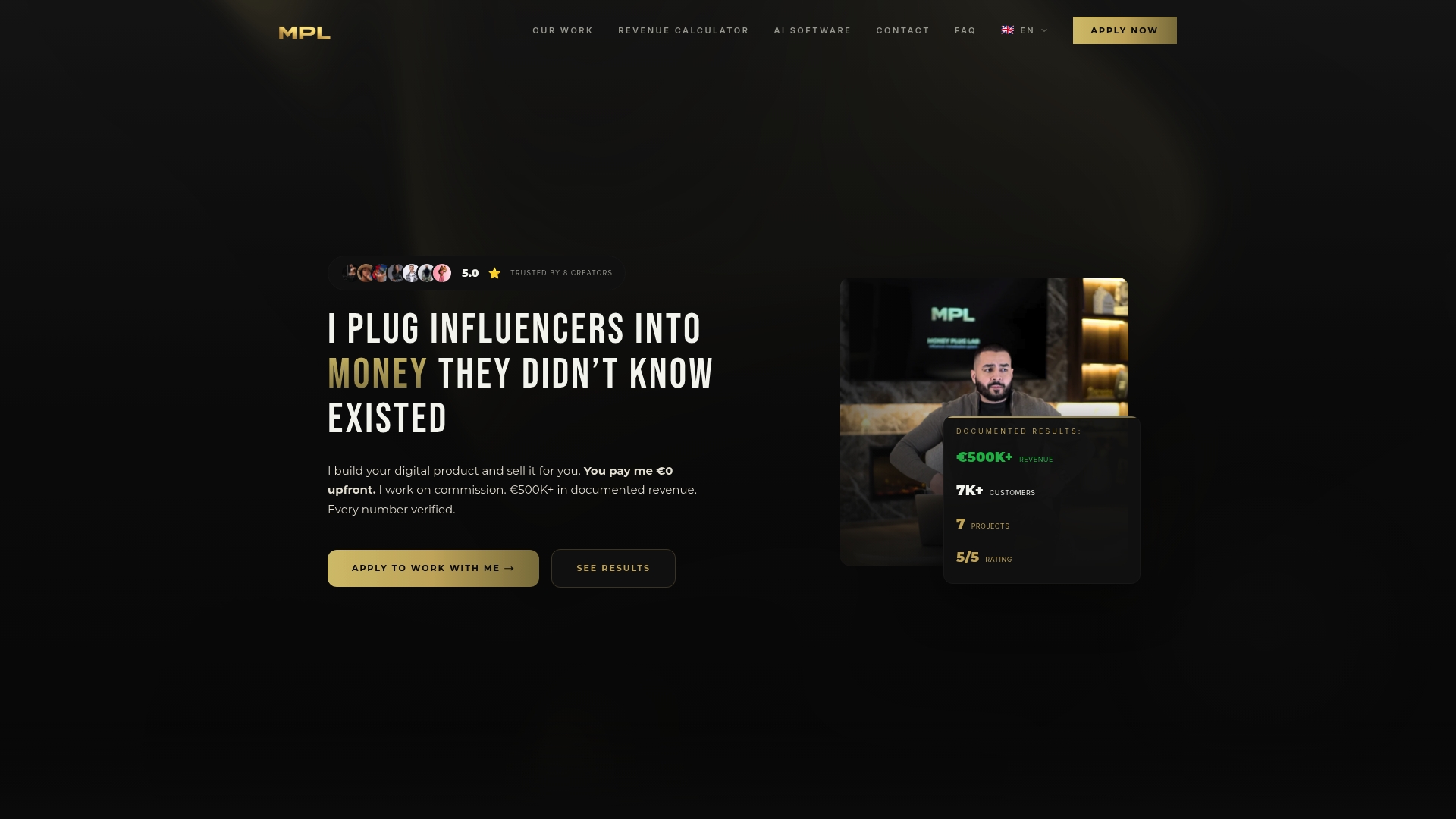
A managed launch partner may handle the entire arc of a launch: audience research, pricing strategy, sales copywriting, VSL production, payment infrastructure, and post-launch ad management. If you want to boost your return on ad spend once you’re live, value-based retargeting is one of the levers a managed campaign can pull that most solo creators never touch. Visit Money-plug to start a conversation about whether your audience and course idea are ready for a managed launch.
Sources
- Esthetician School in Modesto, CA | California Beauty College
- Image Skillnet / Skillnet Ireland
- Texas Southmost College launches Medical Aesthetics Injector Certificate Program - Texas Southmost College News
- Create Your Own Salon Product Range • Image Skillnet
FAQ
How Long Does a Beauty Course Need to Be?
There’s no single required length. Focused certificates can run as short as 16 hours, while full cosmetology diplomas often exceed 1,000 hours depending on licensing requirements in your area. Match the duration to your stated learning outcomes, not to what competitors offer.
Can I Get Licensed Through an Online Beauty Course?
Licensing generally requires a minimum number of hands-on practical hours set by your local licensing board, which pure online courses can’t satisfy on their own. Hybrid programs that pair online theory with scheduled in-person labs are the common workaround for creators who still want licensing-track credibility.
How Do I Launch a Cosmetic or Beauty Product Line Alongside a Course?
Many creators bundle a course with a companion product range, following the model of programs that combine online modules with formulation kits and in-person practicals. Validate demand for the product the same way you validate the course, with a pre-sale or waitlist, before manufacturing inventory.
Which Beauty Courses Tend to Support the Highest Earning Potential?
Courses tied to specialized, high-ticket services (medical aesthetics, advanced injectables, business-building programs for salon owners) tend to command higher prices because the outcome translates directly into higher client revenue for the student. Programs teaching foundational skills for beginners typically price lower but sell in higher volume.
Do I Need a Launch Agency to Sell a Beauty Course Successfully?
No, but agencies remove the execution burden of copywriting, video production, and ad management. Money-plug operates on a revenue-share basis with no upfront cost, so creators only pay when the course generates sales; pricing details are available directly on the Money-plug site.