5–10 Clients in 90 Days: Pilot First Nutrition Launch for Creators
5–10 Clients in 90 Days: Pilot First Nutrition Launch for Creators

The fastest reliable path to a paid launch is a narrow, high-ticket pilot cohort sold through a comment-to-DM funnel, not a polished course built in isolation for months. Pick one transformation for one type of client, pre-sell 8 to 12 seats before you finish building anything, and deliver a multi-week pilot typically lasting around two to three months. Do this right and you land 5 to 10 paying clients within 90 days, with testimonials and results you can use to raise prices and scale.
TL;DR:
- Running a small pilot cohort sold through comment-to-DM automation is the fastest way to secure 5 to 10 paid clients within 90 days, avoiding prolonged content creation.
- Pre-sell 8 to 12 seats at a substantially lower price than your target after building a simple sales page and qualifying clients based on budget, goal, and timeline.
- Use region-specific, managed launch services without upfront costs if you lack time or ad expertise to build your own full tech stack and funnel.
- Validate demand before building the complete program through pre-sells or limited beta offerings, ensuring there is genuine interest.
- Focus on delivering one clear transformation to one client type, set a high-ticket price after collecting testimonials, and use personal DM follow-up for better conversions.
Table of Contents
- 90-Day Launch Roadmap: Month-by-Month Milestones
- How to Design Your Program and Set Pilot Pricing
- Pre-Sell Mechanics: DM Scripts, Qualifying, and Booking Calls
- Content That Converts: Profile, Content Types, and One-Call Conversion Tactics
- Minimal Tech Stack: Platforms, Payments, Onboarding, and Scaling Basics
- Legal and Scope-of-Practice Safeguards You Can’t Skip
- What a Managed Nutrition Program Launch Actually Looks Like
- How Money-plug Handles Your Nutrition Program Launch
- Where to Read More
- Sources
- FAQ
90-Day Launch Roadmap: Month-by-Month Milestones
A nutrition program launch lives or dies on sequencing. Build in the wrong order and you burn months on content nobody asked for.
- Month 1: Foundation. Lock your niche and write a one-sentence promise (who you help, what changes, by when). Confirm your certification status is current, build one free lead magnet, and rewrite your bio so it passes a three-second scan.
- Month 2: Pre-sell. Build a one-page sales page, set up comment-to-DM automation with a qualifying script, and sell 5 to 10 pilot seats before recording a single lesson.
- Month 3: Deliver and document. Run the pilot, collect testimonials and before-and-after data weekly, and assemble the assets (proof, copy, offer page) for your public launch.
Pro Tip: Track three numbers weekly: messages-to-call conversion, call-to-sale conversion, and pilot completion rate. If completion drops below a typical threshold considered good, the problem is almost always your check-in cadence, not your content.
Most successful course creators pilot with a small group of founding clients before building anything at full scale, then use those outcomes as marketing proof for the next cohort.
How to Design Your Program and Set Pilot Pricing
Anchor your offer on one specific transformation for one specific person. “Nutrition coaching” sells nothing. “A 10-week program for postpartum women rebuilding energy without giving up carbs” sells itself.
Your format decision comes next:
- Cohort model works when your audience needs peer accountability and you want to teach once and serve many.
- 1:1 delivery fits early pilots where you’re still refining your process and need tight feedback loops.
- Hybrid (group curriculum plus individual check-ins) often converts best for high-ticket nutrition offers because it feels personal without eating your entire calendar.
On pricing, Ruzuku’s guidance for wellness cohorts recommends setting pilot pricing at a price substantially below your eventual target price, with a payment plan option to lower the barrier to yes. Keep your offer to one flagship tier, with a single optional premium add-on (extra calls, faster response times). Raise prices only after you have testimonials in hand. That sequence, cheap pilot first, proof second, higher price third, is what makes the second cohort easier to sell than the first.
Pre-Sell Mechanics: DM Scripts, Qualifying, and Booking Calls
Selling before you build isn’t a shortcut. It’s the only reliable way to know if anyone actually wants what you’re planning to make. Validate demand first through pre-sells, surveys, or limited paid beta spots. If you can’t sell five seats before building, the program needs a different angle, not more content.
Here’s the flow that works:
- A post triggers a comment, which fires an automated DM (a comment-to-DM setter handles the volume so you’re not manually replying to 200 people).
- The DM asks three or four conversational qualifying questions: What’s your main goal right now? What have you tried already? When do you want to start? What’s realistic for you to invest?
- Once budget and timeline check out, you propose two specific call times rather than asking “when works for you,” and drop a calendar link to lock it in.
Qualify budget before you qualify anything else. It protects your calendar from calls that were never going to convert. The strongest signal of real demand isn’t enthusiasm. It’s a deposit paid and a start date committed to, in writing, before you deliver anything.
- Ask about goal, current situation, timeline, and budget, in that order.
- Never book a call with someone who won’t answer the budget question.
- Treat a paid deposit as your green light to keep building.
Content That Converts: Profile, Content Types, and One-Call Conversion Tactics
Your profile needs to pass a three-second test: a stranger should know exactly who you help, what result you deliver, and what to do next, without scrolling. If your bio reads like a resume, you’re losing sales before anyone messages you.
Content that actually starts DMs tends to follow a few repeatable formats:
- Micro case studies: one client, one specific before-and-after number, one sentence on how.
- Process reels: a 30-second look at what a real coaching week looks like.
- Transformation snapshots: visual proof paired with a short caption naming the timeframe.
- Direct CTA posts: no ambiguity, just “comment ‘START’ and I’ll walk you through it.”
Every post needs exactly one call to action. Split attention between “follow,” “share,” and “comment” and you’ll get none of them reliably. Once someone lands in your DMs, follow up fast. Response speed is a stronger predictor of conversion than follower count, so a same-hour reply from a small account will consistently outperform a next-day reply from a bigger one.
Minimal Tech Stack: Platforms, Payments, Onboarding, and Scaling Basics
You don’t need enterprise software to run a professional pilot. You need five things wired together correctly: a cohort or course platform, a payment gateway (Stripe or PayPal cover most cases), a booking calendar, an intake form, and an automated onboarding email sequence.

The bigger decision is whether to assemble these separately or use an all-in-one platform. An integrated Total Business Solution that combines client management, nutrition analysis, and payments cuts the administrative friction that comes from juggling five disconnected tools, and it becomes worth the higher platform fee once you’re running more than an occasional cohort.
Pro Tip: Automate your welcome sequence and baseline assessment before you launch, not after your first client signs up. A client who waits three days for onboarding materials loses momentum you won’t get back.
- Client management: automated welcome message, baseline intake, and a simple progress tracker.
- Delivery: a platform with in-lesson discussion and live meetings, which Ruzuku’s data shows lifts completion rates versus static video libraries.
- Scaling: basic ad attribution and ROAS tracking from day one, even if you’re not running paid traffic yet.
Legal and Scope-of-Practice Safeguards You Can’t Skip
Every paid nutrition offer needs an explicit educational-only disclaimer, separate from general coaching advice, and a requirement that clients with diagnosed conditions get medical sign-off before starting. Have a one-time legal review of your sales copy, disclaimers, and refund terms before your first pre-sell goes live. It’s cheaper than fixing it after a complaint.
If a client discloses an eating disorder, pregnancy complication, or diagnosed metabolic condition, refer out to a registered dietitian or physician rather than coaching around it. Keep two or three referral contacts ready so that handoff feels smooth, not like a rejection.
What a Managed Nutrition Program Launch Actually Looks Like
Most creators underestimate how much of a launch’s success comes from the funnel and offer structure, not the nutrition content itself. That’s the gap Money-plug operates in.
A managed launch typically covers audience research, product architecture, pricing strategy, sales copy, video sales letters, payment infrastructure, and post-launch ad management, the full stack most solo creators piece together badly under deadline pressure.
If you have the time, the audience, and the appetite to run your own DM funnel and build your own tech stack, do it yourself first. If you need speed, lack ad experience, or want a partner who understands acquisition costs in a specific region, a revenue-share managed launch can help close that gap without upfront risk.
— Money
How Money-plug Handles Your Nutrition Program Launch
A revenue-share managed launch typically involves zero upfront cost to the creator and includes managing the full build: audience research, offer architecture, pricing, sales copy, video sales letters, payment setup, and paid ad management after launch.
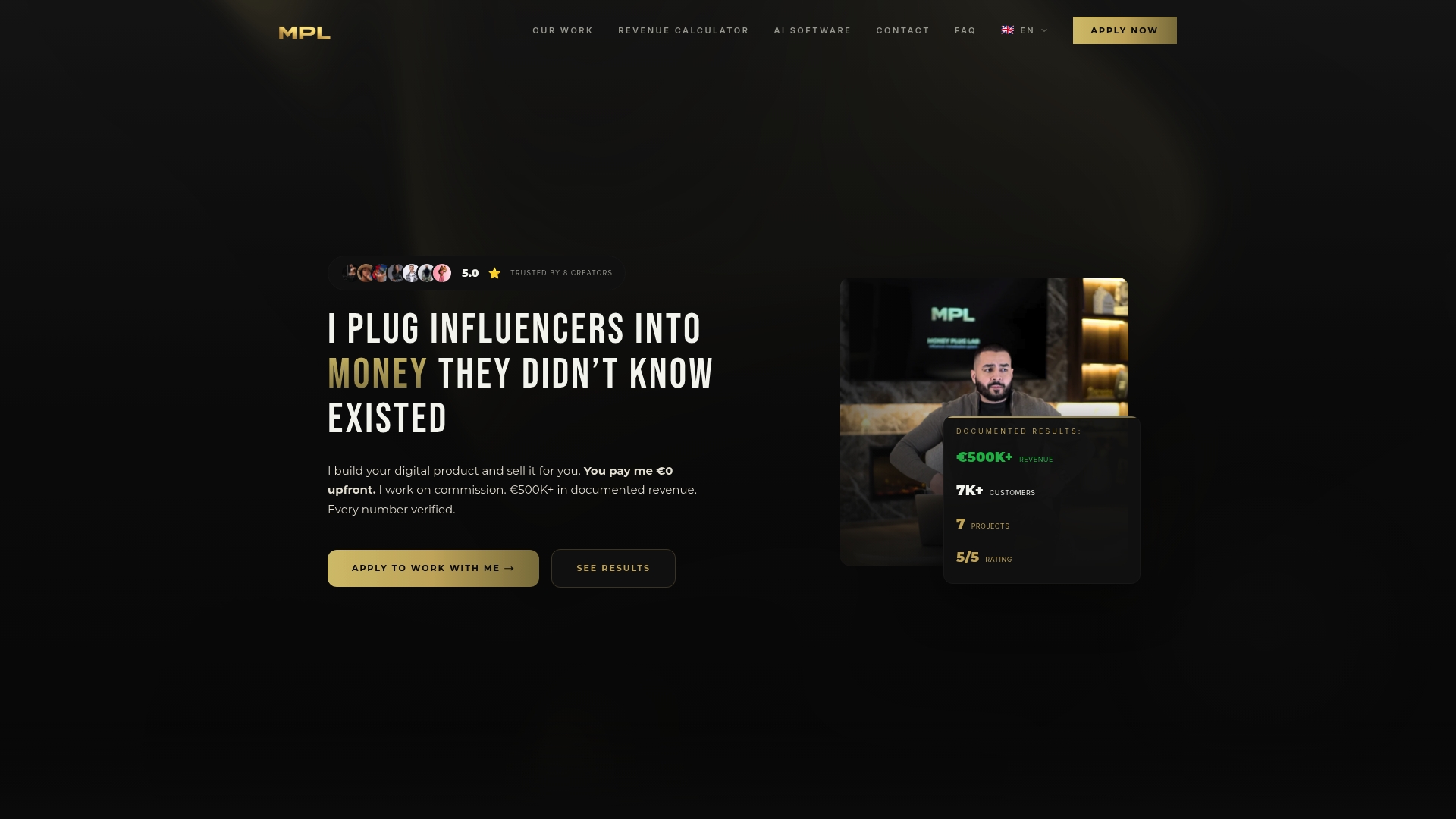
This model fits creators who have an engaged audience but not the hours to run a DM funnel, write a sales page, and manage ad accounts simultaneously. It also fits creators who want region-specific pricing and acquisition strategy dialed in, rather than guessing at what a Western-market playbook would charge. A focus on certain regional markets can mean lower acquisition costs and audiences that respond well to a well-run pilot offer.
If you’re ready to see what a fully managed launch looks like for your audience, visit Money-plug to start a conversation about your program.
Where to Read More
A handful of sources shaped the tactics in this guide, worth bookmarking if you want to go deeper on any one piece.
- SetSmart’s coaching guide breaks down DM automation and booked-call conversion in more detail.
- Ruzuku’s course-creation guide covers cohort structure and behavior-change curriculum design.
- Online Nutrition Planet’s launch guide walks through pre-sell validation methods step by step.
- Wild Foodz’s travel nutrition guide is useful source material if your curriculum touches on eating well while traveling.
Sources
- How to Become a Nutrition Coach & Get Clients 2026 - SetSmart
- How to Create a Health & Wellness Course Online (2026) - Ruzuku
- How to Create an Online Nutrition Course 2026 | ONP
- How to Start a Nutrition Coaching Business Online: The 2026 Professional Guide
FAQ
How Long Should a Pilot Nutrition Program Run?
Eight to twelve weeks is the range most cohort-based programs use, long enough to show measurable behavior change without asking for a year-long commitment upfront.
How Many Clients Do I Need for a Pilot to Be Worth Running?
Three to ten founding clients is enough to generate real feedback and testimonials before you invest in a full public launch.
Should I Build the Full Curriculum Before Selling Anything?
No. Validate first, through pre-sells, surveys, or a paid beta cohort, and only build out the full program once people have paid to join.
What’s the Fastest Way to Get My First Paying Clients?
A comment-to-DM funnel with fast, automated follow-up converts faster than posting content and waiting for inbound messages.
Is It Better to DIY My Launch or Work With an Agency?
DIY works if you have time for funnel-building and ad management; a revenue-share model like Money-plug’s fits creators who want a full-service launch without upfront cost.